
An Invisible Net: When and Where to Use Commercial Motion Detectors
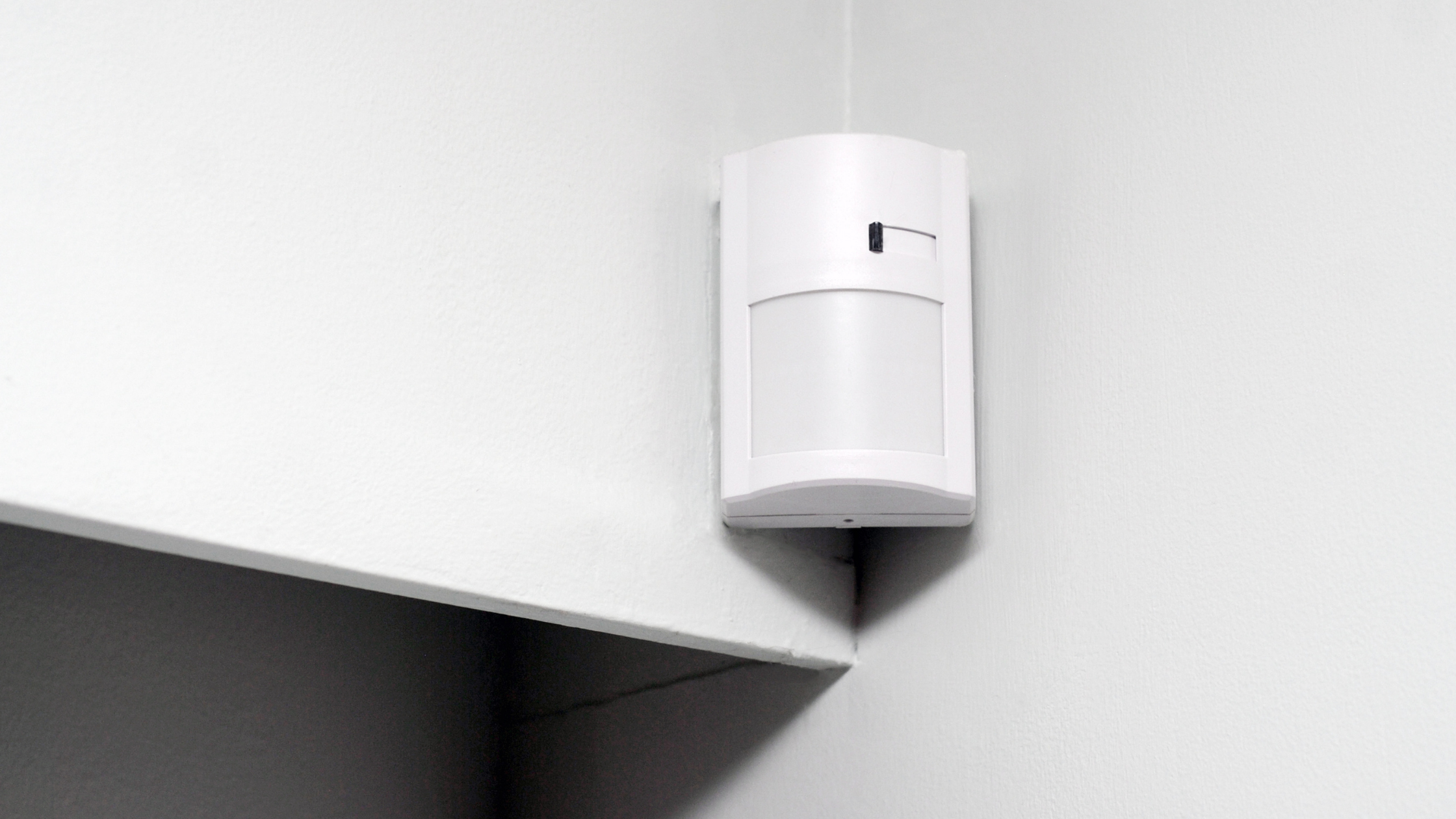
When we design a security system for a new client, we usually begin by securing the doors and setting up cameras in the parking lot. But what if someone gets past these defenses? For example, they might cut through a wall from an empty neighboring suite or hide in a restroom before closing time.
To keep your business safe, you also need protection inside the building. Think of it as setting up an invisible net.
Motion detectors play a key role in protecting the inside of your business, but many people misunderstand how they work. If installed in the wrong place, they can cause annoying false alarms in the middle of the night. But when we use them correctly with the Alarm.com system, they become reliable security tools and can even help automate your facility.
Here’s what you need to know about how today’s motion detectors work, where we install them, and where they should not be placed.
A Quick Fun Fact: The Origins of the Motion Alarm
Before we talk about today’s technology, let’s look at where it started. In the early 1950s, inventor Samuel Bagno used World War II radar technology to create the first ultrasonic motion alarm.
Bagno’s device filled a room with high-frequency sound waves that people could not hear. If someone moved through the room, their body changed the frequency of the waves returning to the sensor. This idea, called the Doppler effect, was innovative at the time. However, the system was very sensitive to vibrations. Even a ringing phone or a shaking window could set off a police response.
Fortunately, today's technology is much more advanced than those early sound-wave systems.
How Modern Motion Detectors Work
Today’s commercial-grade motion detectors have solved the false-alarm problems older systems had. Instead of just sensing general movement or vibration, they look for specific environmental patterns using a technology called Passive Infrared (PIR).
PIR sensors split a room into an invisible grid. They do not give off energy; instead, they quietly remember the room’s normal heat pattern. When something with a different temperature, like a person, moves quickly across the grid, the sensor goes off.
In high-risk or tough commercial settings, the standard is to use Dual-Tech Sensors. These combine PIR heat detection with Microwave radar. Both must sense an intruder at the same time for the alarm to go off. If hot air from a vent triggers the PIR but the Microwave does not detect movement, the system ignores it. This way, modern hardware uses logic instead of chance.
PIR Motion Coverage Simulator
See how a single corner-mounted sensor protects an entire room.
Strategy: Where to Use Motion Detectors
We do not need to cover every inch of your building. That would be costly and unnecessary. Instead, we place motion detectors at key points where people must pass. This way, anyone moving through your building must cross our invisible net.
1. Main Corridors and Hallways: Rather than putting a sensor in every office, we place detectors at the ends of main hallways. No matter where someone enters, they must use the corridor to move through the building.
2. High-Value Target Rooms: Every business has important areas. For a logistics company, this could be the IT server room. For a retail store, it might be the cash office or inventory cage. We always put a motion sensor near these key spots.
3. Lobbies and Reception Areas: Lobbies are large, busy spaces that connect much of your building. A motion detector in the corner can cover a lot of ground and secure the main path in one step.
"Do Not Install" Zones
Knowing where not to put a sensor is just as important as knowing where to install one. Poor placement is the quickest way to cause false alarms. We make sure to avoid these mistakes:
Directly Facing Exterior Windows: Even though modern PIR sensors filter out many issues, pointing them at windows where the sun heats the glass quickly can cause false alarms.
Directly Above or Facing HVAC Vents: Hot air from a furnace can look like a person entering the room to a sensor. We always place sensors away from strong air currents.
Warehouse Environments with Loose Inventory: If boxes fall over at night, a regular motion sensor might detect the movement. In warehouses, we usually use overhead door contacts and camera analytics instead of standard motion sensors.
When to Use Them: Beyond the Burglar Alarm
Since our systems use the Alarm.com platform, your motion detectors do more than just wait for emergencies. They also help automate your daily operations.
We can use data from your motion detectors during business hours to set up specific rules for your operations:
Smart Lighting: When the first employee enters a dark hallway early in the morning, the motion sensor detects them and tells Alarm.com to turn on the lights.
Energy Management: If the motion detector in the conference room does not sense activity for 30 minutes, it tells your smart thermostat to switch the HVAC to eco-mode. This helps save on utility costs.
Restricted Area Alerts: If someone enters the IT Server Room during business hours, the system can send a silent push notification to the facility manager’s phone. This keeps you informed about who is entering sensitive areas, even when the building is not armed.
Trust Your Interior Security
We understand that earning your business means showing you our value, not just our price. Part of that value is designing a system that works smoothly and does not wake you up in the middle of the night with false alarms.
We find the right solution, offer it at a fair price, and keep our promises. If you are ready to protect your facility with a smart and reliable interior system, we are here to help.
Request Your Commercial Security Audit
Are you using old motion detectors that cause false alarms, or do you need to secure a new facility? Fill out the form below. Our team will review your floor plan and create a custom, reliable interior security plan.