
How Commercial Intrusion Alarms Work and Why Your Business Needs One | ASI
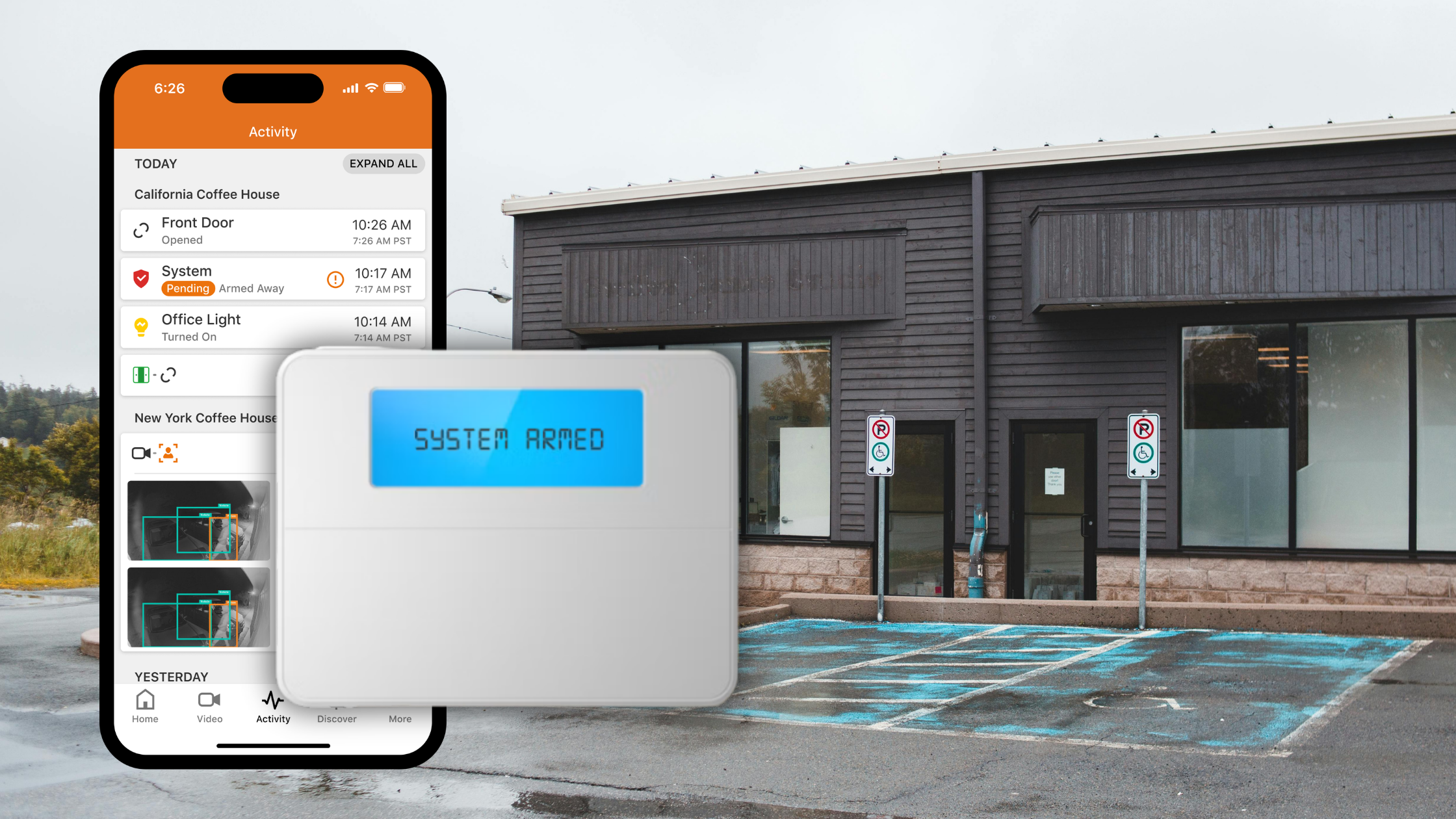
Most people picture a loud siren, flashing lights, and a keypad when they think of a burglar alarm. For years, commercial security was just that—a reactive system meant to scare off intruders after they broke in.
Today, a simple siren is not enough to protect your assets, employees, or business. Criminal tactics have changed, so your security needs to keep up.
Modern commercial intrusion systems, such as those utilizing the DSC PowerSeries Neo platform and integration with Alarm.com, offer significantly enhanced capabilities compared to traditional alarms. Beyond triggering audible signals, these systems communicate directly with monitoring centers, verify event legitimacy through advanced sensor technology, automate building functions like locking doors or adjusting thermostats, and give business owners tools to supervise security and operations remotely.
Let’s take a closer look at how modern commercial intrusion alarms work and why your business needs one.
The Anatomy of a Commercial Intrusion System
A commercial security system uses specialized sensors that all connect to a central control panel. When armed, the panel constantly checks the sensors for any perimeter breaches or environmental changes.
To fully protect your business, an ASI-designed system uses several layers of detection:
1. Magnetic Contacts
The first layer protects your doors and windows. We use strong, commercial-grade magnetic contacts—one on the door frame and one on the door. When the door is closed, the circuit is complete. If someone forces the door open while the system is armed, the circuit breaks and the alarm triggers. For warehouses, we also use special overhead door contacts that handle the heavy vibrations of rolling steel doors.
2. Acoustic Glassbreak Detectors
Thieves often avoid heavy steel doors by breaking a storefront window instead. A regular door contact will not trigger if only the glass breaks. That’s why we use Acoustic Glassbreak Detectors. These sensors are tuned to the sound of breaking glass and trigger the alarm right away, even before the intruder enters.
3. Dual-Tech Motion Sensors
If someone gets past the perimeter, such as by breaching a wall from another suite, interior motion sensors act as a backup. Traditional motion detectors usually cause false alarms from things like heating vents or rodents. ASI uses Dual-Tech sensors that need both body heat and movement to trigger. This way, the sensor ignores things like mice or air conditioning but will detect a person.
4. Dual-Path Cellular
An alarm system must be able to call for help. Older systems used copper phone lines, which thieves could easily cut. ASI systems use Dual-Path Communication. The panel connects to our 24/7 monitoring station through a secure cellular signal, with your building’s internet as backup. Even if the power is out and phone lines are cut, your system still sends the emergency signal right away.
Operational Scenarios
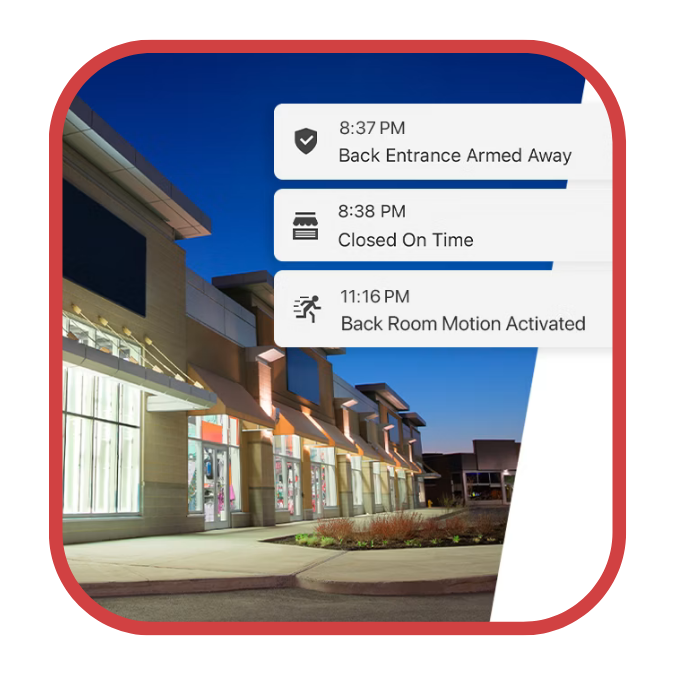
To see why an integrated system matters, here’s how it works during a real emergency. The old way: A thief throws a brick through your storefront window at 2:00 AM. The alarm goes off. The system tries to call the monitoring center over a phone line. The center calls the business owner, who is asleep and misses the call. Police are finally sent to a general burglar alarm at your address. They arrive 25 minutes later, but the thief and your inventory are already gone.
The ASI integrated way: A thief throws a brick through the window. The Glassbreak Detector picks up the sound right away.
The DSC panel immediately sets off a 110-decibel siren.
The Alarm.com dashboard sends a priority alert to the facility manager’s phone, waking them up right away.
Since your intrusion system works with Prism Series AI cameras, the Alarm.com app includes a 10-second HD video clip showing the exact moment the glass broke.
The central monitoring station gets the signal right away through cellular backup. Because the video shows a crime in progress, police treat it as a high priority and arrive in minutes instead of half an hour.
The Daily ROI of Intrusion Alarms
While safeguarding your inventory remains a fundamental objective, a commercial intrusion system offers benefits that extend far beyond security. Its true value lies in its ability to enhance and streamline daily business operations.

Employee Accountability: Give each employee a unique 4-digit user code, and your intrusion panel acts like a time clock. You get a clear digital record showing who opened the building at 6:02 AM and who armed it—or forgot to—at 9:15 PM.
Automated Energy Management: Your alarm panel knows when the building is occupied or empty. We connect your DSC panel to Alarm.com smart thermostats. When your manager arms the system at night, the HVAC automatically switches to eco mode, cutting your utility costs.
Insurance & Liability: Insurance companies know the value of a monitored intrusion system. If your alarm is active and centrally monitored—especially with fire or life safety features—you can often get lower insurance premiums, helping the system pay for itself.
Escaping complicated systems
You can buy motion sensors and sirens online, but putting together different consumer-grade devices creates a patchwork system that may fail when you need it most.
Commercial security requires a unified and integrated approach to mitigate significant business risks. At ASI Security Solutions, we ensure your DSC Neo intrusion panel, Alarm.com access control, and video surveillance systems work cohesively on a single, secure, encrypted network. Proactively addressing your facility’s security needs reduces the likelihood of substantial financial loss or operational disruption from inadequate protection.
Request Your Commercial Intrusion & Perimeter Audit
Are you using outdated technology or planning to secure a new commercial facility? Fill out the form below. We will review your property and design a custom, reliable perimeter defense strategy.